
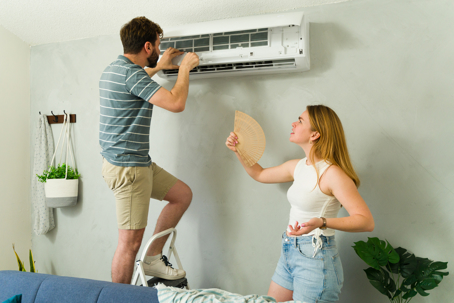
Walking into a warm house when your thermostat is set to "cool" is a frustrating experience for any homeowner in Southeast Michigan. When the humidity rises, you rely on your cooling system to provide a consistent escape from the heat. However, several common issues can cause your system to circulate warm air or stop cooling altogether. Understanding the root cause is the first step toward restoring your comfort, and while some fixes are simple, others require professional AC repair to prevent permanent damage to your equipment.
Common Culprits Behind a Warm House
If your system is running but the temperature isn't dropping, one of these five issues is likely the reason. Identifying these early can save you from a complete system breakdown during a heatwave.
1. Frozen Evaporator Coils
It might seem counterintuitive, but your air conditioner can actually freeze up in the middle of summer. When airflow is restricted or refrigerant levels are low, the evaporator coil can become too cold, leading to ice formation on the unit. Once this happens, the ice acts as an insulator, preventing the system from absorbing heat from your indoor air. If you see ice on the copper lines or the indoor unit, turn the system off and call for service.
2. Tripped Breakers or Blown Fuses
Sometimes the problem isn't mechanical, but electrical. Your air conditioner pulls a significant amount of power, and a surge or a strained motor can cause the circuit breaker to trip. Check your electrical panel to see if the switch for the AC unit has moved to the "off" or "neutral" position. If the breaker trips repeatedly after you reset it, do not keep trying; this often indicates a grounded compressor or a failing capacitor that needs expert attention.
3. Clogged Condensate Drain Lines
Your air conditioner doesn't just cool the air; it also removes moisture. This moisture collects in a drain pan and flows out through a condensate line. Over time, algae or debris can clog this pipe. Many modern systems have a safety float switch that will automatically shut the system down if it detects a backup, preventing water damage to your home. Clearing the line is essential to restarting the cooling cycle.
4. Failing Compressor or Capacitor
The compressor is the heart of your cooling system, responsible for circulating refrigerant between the indoor and outdoor units. If the compressor fails, the fan might still blow, but the air will never get cold. Often, a faulty capacitor—which provides the initial electrical "jolt" to start the motor—is the actual culprit. Replacing a capacitor is a routine fix, but a failing compressor often requires a more significant discussion about repair versus replacement.
5. Low Refrigerant Levels
Your AC system is a closed loop, meaning it should never "run out" of refrigerant. If your levels are low, it means there is a leak somewhere in the coils or the refrigerant lines. Low pressure prevents the system from removing heat effectively, placing immense strain on the compressor. A professional technician can locate the leak, seal it, and recharge the system to factory specifications to restore its cooling power.
Trust the Experts for a Cool Home
Attempting to troubleshoot complex mechanical or electrical failures on your own can lead to costly mistakes or safety risks. At Kelley Brothers, our Bryant factory-trained technicians have over 25 years of experience diagnosing and fixing cooling issues for Southeast Michigan residents. We pride ourselves on honest assessments and fast, reliable solutions that get your home back to the perfect temperature.
If your system is struggling to keep up, contact our team at (734) 251-4625 to schedule a professional diagnostic visit and ensure your family stays cool all summer long.